The call comes in Thursday afternoon. A client needs turning movement counts at four intersections by Friday morning. An emergency planning submission, a revised traffic impact assessment, a project deadline that moved forward without warning.
You've been here before. The question isn't whether the client's deadline is reasonable. It's whether you can hit it.
For most of the industry's history, the honest answer was no. Manual counting crews need 48 to 72 hours of notice, minimum. Data processing firms add days on top of that. Manual video review means hours of analyst time per location before you have anything to send. By the time you've processed a Friday request using traditional methods, the submission window has closed.
That math is changing. A growing number of consultancies now treat 24 hours as a timeline they can commit to, not a request they need to manage expectations around. Here's how they're doing it.
Why 24 Hours Was Never Realistic With Traditional Methods
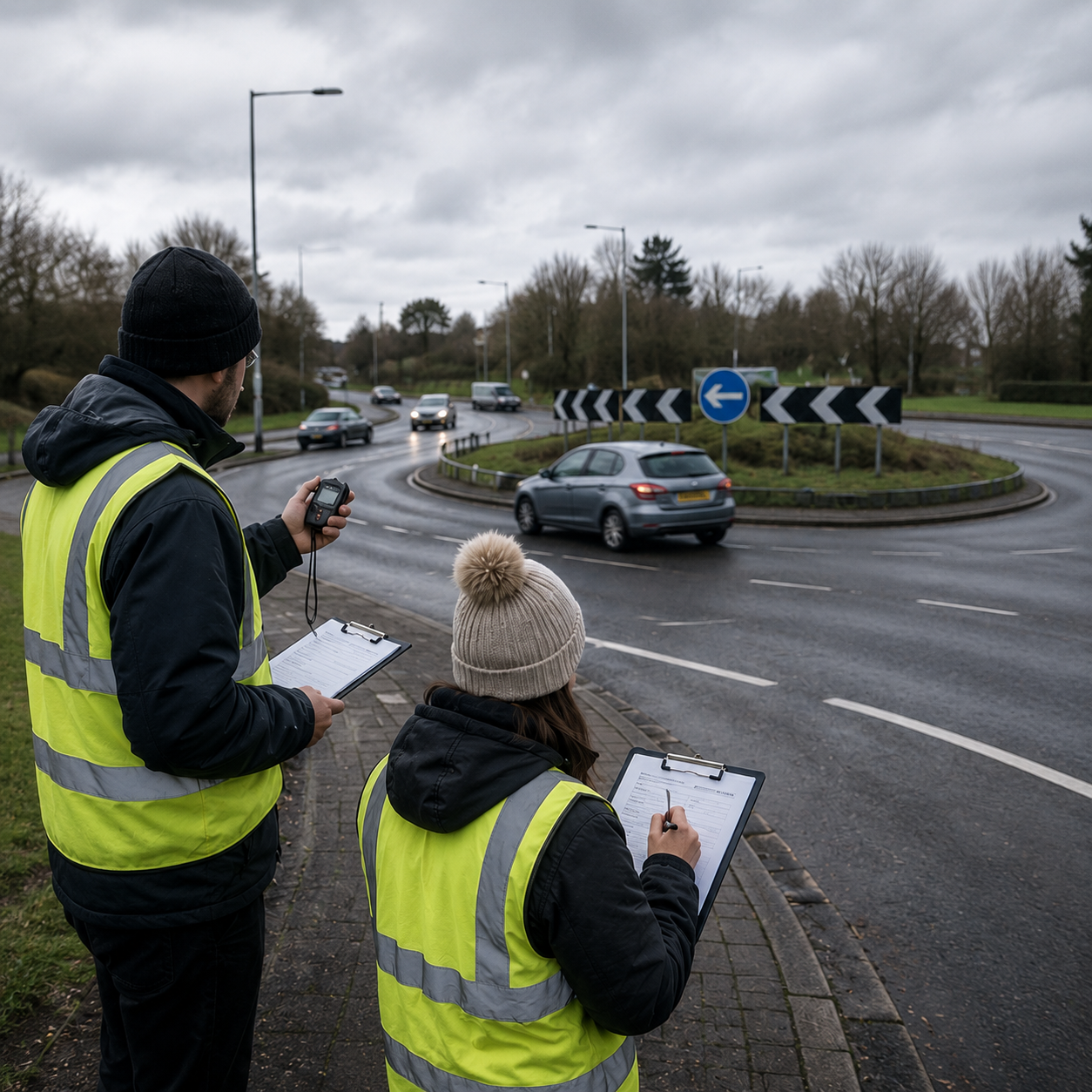
Manual traffic surveys depend on logistics that don't compress well. Deploying a counting crew requires scheduling, travel, equipment setup, and enough lead time to account for shift planning. Multi-site jobs add coordination overhead. Peak-hour counts at busy intersections need contingency for crew gaps or equipment failure.
When footage already exists, manual video review adds its own delays. A single hour of footage from a complex intersection can take two to three hours to code by hand, depending on the classification depth required. A four-location study with two hours of peak-period footage per site means 24 to 32 hours of analyst time for the review step alone, before any QA or report formatting begins.
The UK Department for Transport's traffic count data and standard survey industry guidance assume lead times measured in days to weeks. Those assumptions are embedded in procurement workflows and project timelines across the industry.
The cost of those timelines isn't just the invoice. It's the projects that don't get taken on, the clients who find faster alternatives, and the junior engineers spending hours reviewing footage that AI can process in minutes.
Where the Bottleneck Actually Sits
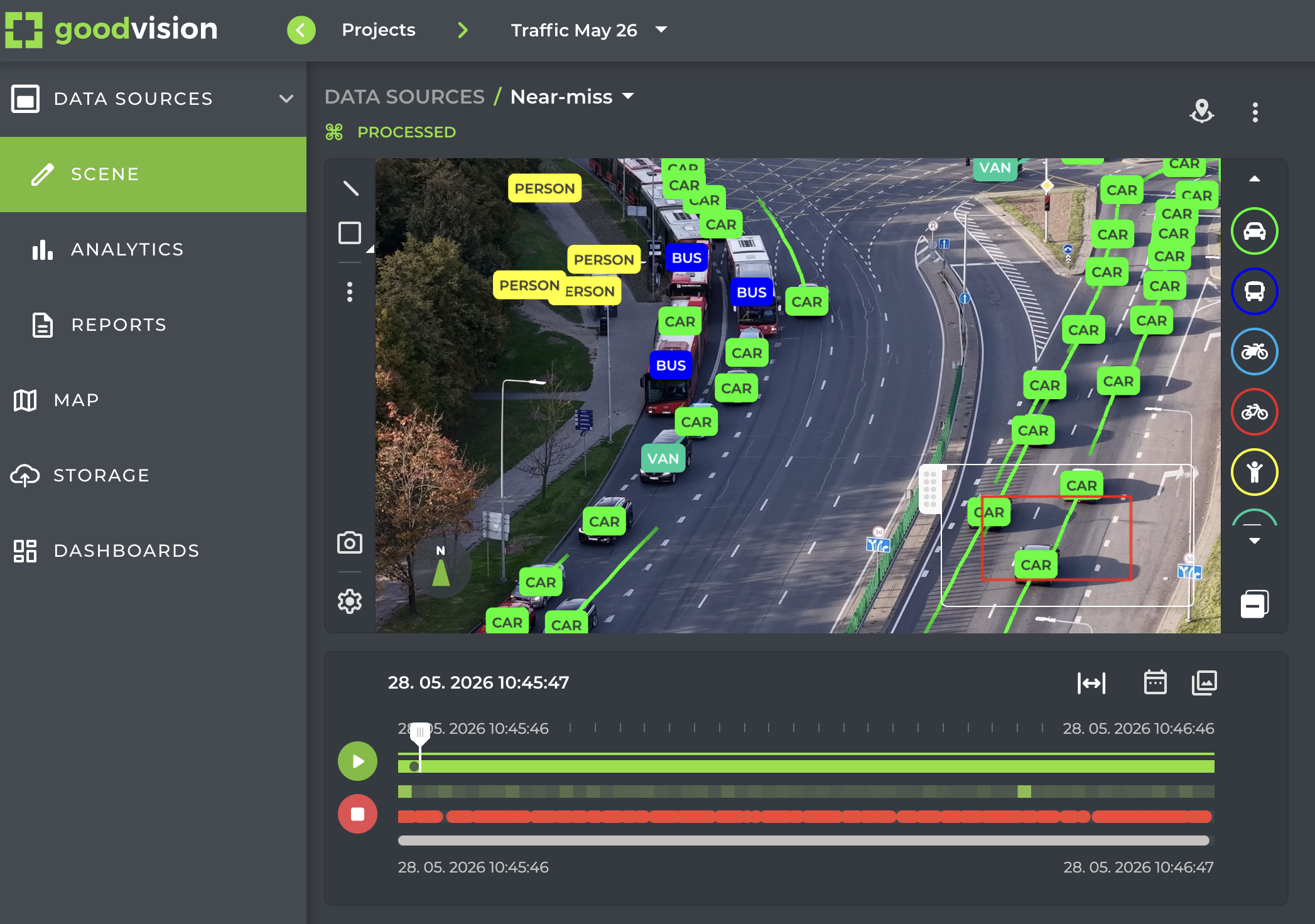
Even when camera footage exists, the bottleneck shifts to processing speed. The footage is available. The data isn't.
That exposes a structural limitation of manual methods: they don't scale under deadline pressure. Adding more analysts to a crunch job helps marginally, but each analyst still processes footage at the same rate. Doubling headcount doesn't halve the turnaround time in any meaningful way, and it introduces QA complexity that often adds time rather than saving it.
The classification problem compounds quickly on complex intersections. Clients commissioning turning movement counts for signalized intersections don't just want bulk volume. They want counts by vehicle class, by movement, by time period, in a format that feeds directly into capacity analysis or a traffic model. That level of detail slows manual review significantly and introduces consistency risk across reviewers.
The comparison between manual and AI-based approaches is larger than most engineers expect the first time they run it, especially on multi-movement intersections where classification depth matters most.
How Consultancies Are Actually Hitting These Timelines
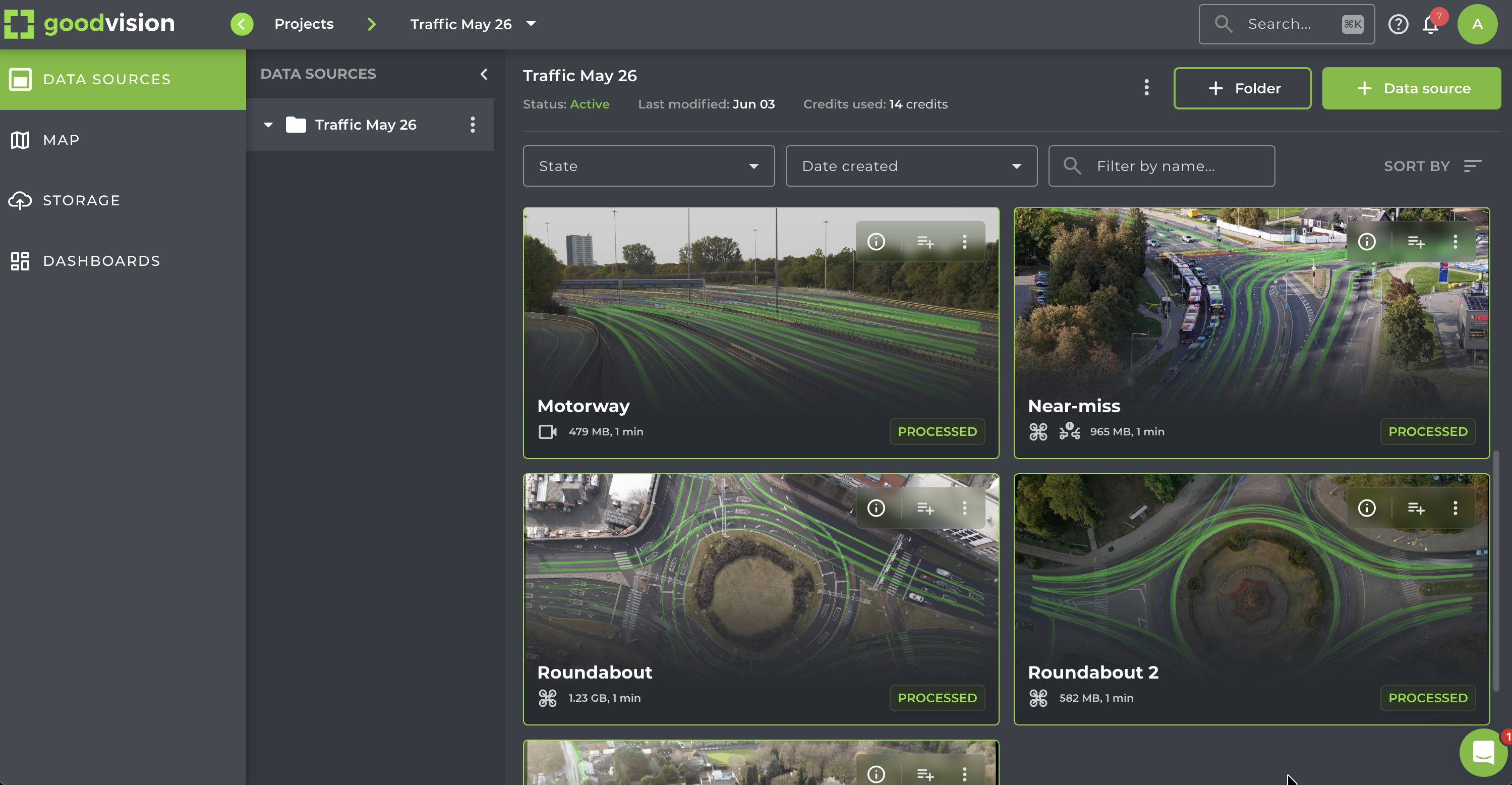
The shift comes from removing the processing bottleneck entirely. When you upload footage to GoodVision Video Insights, the AI processes every camera in parallel. A four-location study doesn't take four times as long as a single-location study. It takes roughly the same time, because parallel processing runs each video independently in the cloud.
For A-T-R in the UK, that changes the entire project rhythm. Footage uploaded in the morning is processed by early afternoon. Classification runs across eight vehicle classes automatically, including the detailed breakdowns that client impact assessments require. Natalie Bates, General Manager at Advanced Transport Research, put it plainly: "The ability to offer the added value in the form of visual representation as well as reducing data turnaround times with automated analysis via GoodVision has been of substantial benefit to our clients."
CzechConsult took the same logic further, building GoodVision into their full traffic collection automation workflow. What used to require a team of analysts reviewing footage across several days now runs almost without manual intervention. Anton Rabizo at IDOM described the operational shift directly: "There was way less stress on projects with GoodVision comparing to other solutions or human counters."
Accuracy is the obvious follow-up question. Any consultancy building client deliverables from AI-generated data needs to know the counts hold up in a report or regulatory submission. GoodVision returns 95%+ accuracy on turning movement counts and vehicle classifications, validated against manual counts. That's the threshold that makes data defensible without a manual QA pass on top.
For drone-based work, Ramboll has demonstrated the same approach at scale. Processing drone footage through GoodVision means O-D matrix data and movement counts come back within hours. No specialist post-processing. No weeks of manual review. The method that once extended project timelines now fits inside a working day.
When processing time drops from weeks to hours, the project planning logic changes. You stop building multi-week buffers around data collection. You stop declining projects because the timeline doesn't accommodate a traditional survey. The consultancies that have made that shift aren't treating AI processing as a backup option for urgent jobs. They're treating it as the standard workflow, because the turnaround is predictable and the accuracy holds up in client deliverables.
If your current process still depends on manual counting to hit tight client deadlines, the comparison is worth running on your own footage. Book a demo at goodvisionlive.com/request-demo/ and run your first analysis within days.