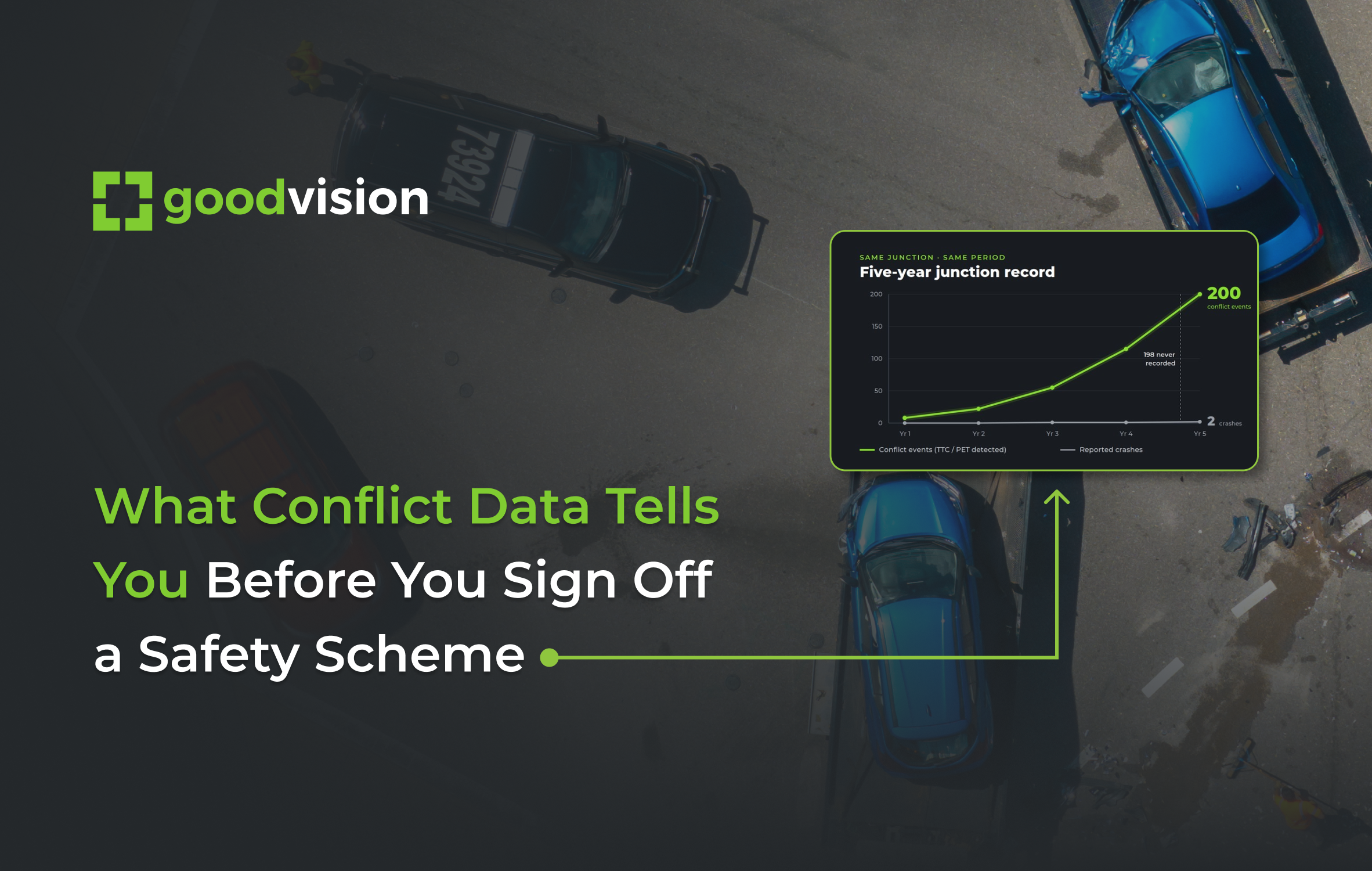
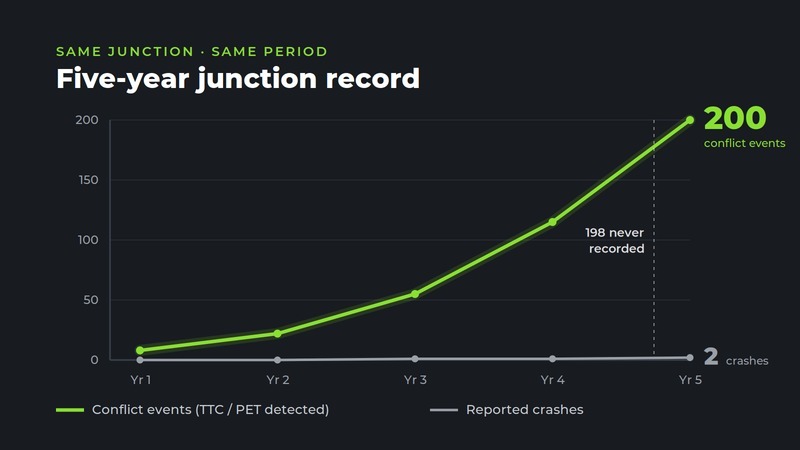
The crash record at a junction shows two incidents in five years. Low enough that the scheme gets approved. The safety audit passes. The road opens.
What the crash record does not show is the 200 times a vehicle ran the stop line while a cyclist was crossing. Or the 40 occasions when a pedestrian stepped into the carriageway and a driver braked hard enough to leave skid marks. Near-miss events do not go into the database. They go unrecorded.
That gap between "no crashes" and "no conflicts" is where most safety sign-offs break down. According to the World Health Organization, road traffic crashes cause around 1.19 million deaths per year globally. The pre-crash conflicts that predict those crashes are rarely measured at all. Conflict data is the measurement that closes that gap, and until recently, collecting it at any useful scale was expensive enough that most schemes skipped it entirely.
This post explains what conflict data gives you, why standard traffic analysis leaves it out, and how automated detection makes conflict analysis practical on any scheme budget.
What Conflict Data Measures (and Why It's Different From Crash History)
Crash records are reactive. They document events that have already happened, and at most junctions, those events are rare. The statistical signal takes years to build. By the time a location has accumulated enough crash data to be statistically meaningful, it has already caused harm.
Conflict data works differently. A conflict is any interaction between two road users where one or both had to change speed or direction to avoid a collision. Two metrics define severity:
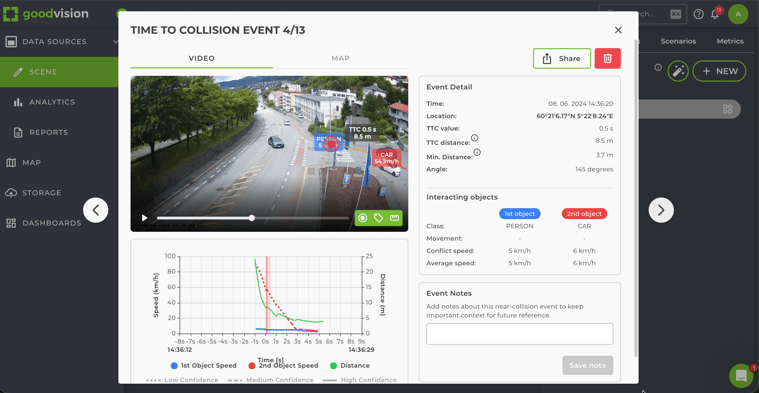
TTC (Time-to-Collision): The time remaining before a collision would occur if both road users maintained their current speed and trajectory. Lower values indicate more serious conflicts.
PET (Post-Encroachment Time): The time between when the first road user left a conflict zone and when the second arrived. A near-miss with a PET of 0.5 seconds is a very different safety signal than one with a PET of 3 seconds.
These measurements let you quantify not just how often conflicts occur, but how serious they are. A junction might log 80 conflicts in a single day, with most in the 2-4 second PET range and a handful below 1 second. Those sub-1-second events are the ones that warrant design intervention before a crash ever happens.
That is the core value: conflict data lets you act on what the road is telling you before it tells you with a fatality.
Why Standard Traffic Analysis Misses the Problem
Traffic counts tell you volume. Speed surveys tell you how fast vehicles are moving. Crash records tell you what already went wrong. None of those answer the question a safety engineer needs answered before sign-off: how often are road users coming close to colliding?
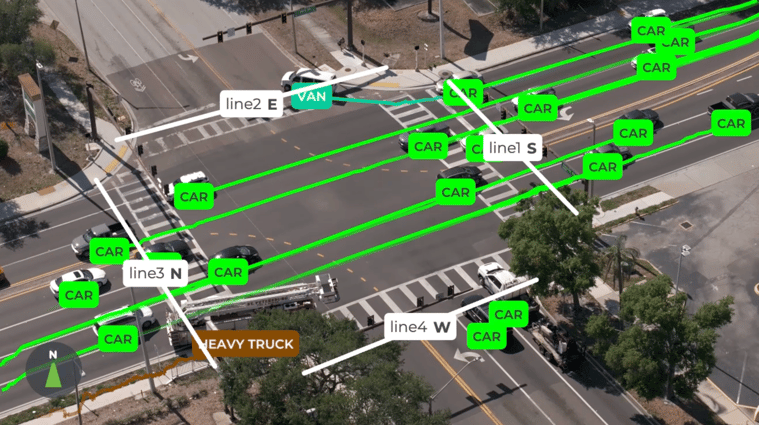
The traditional method for answering that question is manual video review. A trained analyst watches hours of footage, identifies conflict events, and logs the relevant metrics. It works, but the time and cost involved mean it rarely gets used outside of formal road safety studies with dedicated budgets. A standard transport assessment does not include conflict observation. Most safety audits do not either.
The result is that safety schemes routinely get signed off on the basis of geometric compliance, volume capacity, and crash history. All three are necessary. None of them are sufficient.
There is also a sampling problem. Manual conflict studies tend to cover short observation windows because that is what the budget allows. Conflicts that occur outside peak hours, in adverse weather, or during specific signal phases get missed entirely. You end up with a partial picture presented as a complete one. The near-miss detection metric that cities keep getting wrong goes into more detail on why that sampling gap matters at the network level.
What Automated Conflict Detection Changes
Automated near-miss detection using AI cuts the time required to analyze conflict data by 90% compared to manual video review. That changes the economics of the question entirely. A conflict study that previously required a dedicated analyst budget can run as a standard step in a safety scheme assessment, using footage you already have.
GoodVision's Traffic Safety Suite processes video footage to detect and classify conflict events automatically, calculating PET and TTC values across all road user types: vehicles, pedestrians, cyclists, and e-scooters. It does not require specialist hardware. Upload footage from existing cameras and get structured conflict data back within hours.
The City of Aarhus, Denmark applied this approach to analyze near-miss events at 90% faster than their previous manual process. That speed does not just save time on one study. It makes it practical to run conflict analysis across multiple locations in parallel, or to compare before-and-after data when a scheme is modified.
For a case study of how this data feeds directly into scheme assessment, the near-miss analysis carried out by GTS shows how conflict data from GoodVision Video Insights was used to evaluate road user behavior at a specific location and feed into safety recommendations. The AI near-miss detection approach supporting Vision Zero programs covers the full methodology and road user classification in detail.
There is also a practical benefit for sign-off itself. Conflict data provides defensible documentation of the safety state of a scheme before it opens and after modifications are made. If a safety audit raises a concern, you have quantified evidence to respond with, not engineering judgment alone. That matters when a scheme is contested, when there is regulatory scrutiny, or when Vision Zero targets create direct accountability for outcomes.
How transport authorities are using vision AI instead of manual audits documents how this plays out across different institutional contexts. And the data analytics approach to Vision Zero makes the case for why predictive conflict monitoring needs to replace reactive crash-response at the network level.
If you are signing off a safety scheme and conflict data is not part of the assessment, you are working with incomplete evidence. The technology to change that is available, and the cost barrier that historically made conflict studies a budget line item rather than a baseline step no longer applies.
Book a demo at goodvisionlive.com/request-demo/ to see how GoodVision's Traffic Safety Suite delivers conflict data from your existing footage within hours.